Xieyi Painting and the Concept of 'Yi'
|
The term 'Xieyi' itself, often translated as "freehand" or "sketching ideas," is deeply rooted in the Chinese concept of 'Yi' (意). Yi goes beyond simple representation; it encompasses the idea, intent, meaning, and spirit of the subject, as well as the artist's inner understanding and feeling. Xieyi is not just about depicting what is seen but about expressing what is felt and understood. It’s about capturing the ‘essence’ rather than the literal depiction. 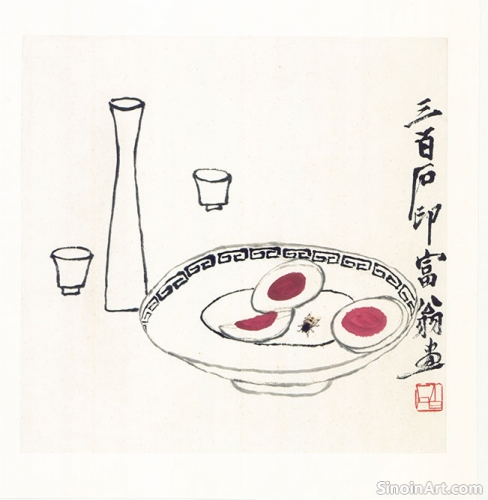 In Xieyi painting, the pursuit of 'Yi' is paramount. The artist aims to convey the inner essence of the subject, using simplified forms, spontaneous brushstrokes, and suggestive imagery. The artwork is not meant to be a perfect replica of reality, but rather an expression of the artist’s personal encounter with and understanding of that reality. It's about capturing the spirit and feeling of the subject, rather than its exact likeness. 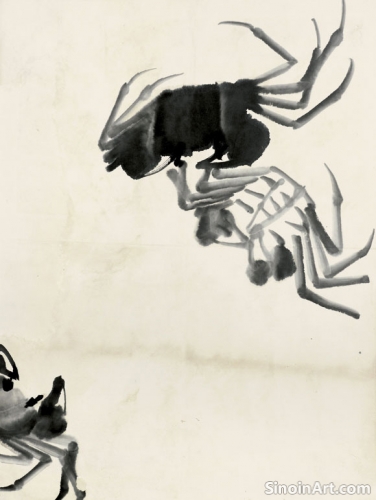 The concept of 'Yi' also relates to the artist's intention and creative process. It's about painting from the heart and mind, rather than solely from the eyes. It emphasizes the importance of intuitive expression, allowing the artist's inner emotions and thoughts to guide their brushstrokes. Spontaneity is embraced as a means to achieve this deeper expression. The resulting art is the product of a unique inner experience. 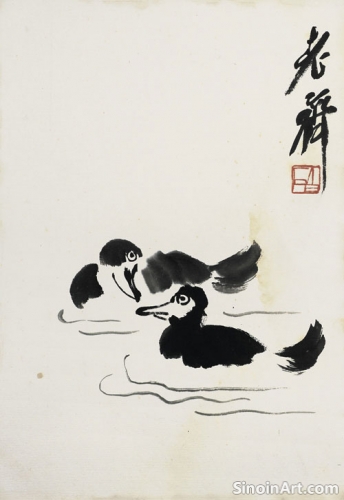 'Yi' also involves the viewer's active participation in completing the artwork. The suggestive nature of Xieyi encourages viewers to engage their own imagination and experience to fill in the gaps and to interpret the painting in their own way. This interplay between the artist's intention and the viewer's interpretation is central to the art form's success. The artwork invites conversation and contemplation. The pursuit of 'Yi' is a lifelong journey for the Xieyi artist. It requires continuous exploration, experimentation, and a deep connection with both the natural world and the inner self. It’s not merely about technical proficiency but about achieving a state of harmony and unity with the subject, the materials, and the moment of creation. It is a spiritual and artistic quest. |
Tag : Yi in Chinese art, intent in painting, Xieyi essence, expressive art, understanding meaning
Related information
- The Concept of "Shu Qie" in Xieyi
- Xieyi Painting and the Appreciation of Imperfection
- Famous Xieyi Artists: Masters of the Spontaneous Brush
- The Enduring Appeal of Xieyi Painting
- The Influence of Confucianism on Xieyi
"Shu Qie" (the written and the carved) emphasizes the connection between calligraphy and seal carving, influencing Xieyi through shared qualities of line, form, expression, and the use of seals, all of which combine to highlight the holistic nature of Chinese art, and inform the artistic process.
Xieyi painting embraces imperfection as a source of beauty and reflects the spontaneity of the natural world, valuing the unpredictable nature of ink and brushstrokes, the unique hand of the artist, and the philosophy of Daoism, inviting viewers to appreciate the process and the authentic human element within the artwork.
This article highlights the contributions of famous Xieyi artists throughout history, including Xu Wei, Bada Shanren, Qi Baishi, and Zhang Daqian, discussing their unique styles and their influence on the evolution of the art form.
The enduring appeal of Xieyi painting stems from its emotional and intuitive power, achieved through personal expression, spontaneity, suggestive imagery, and the pursuit of essence, connecting with viewers across cultures, and inspiring contemplation, tradition, and a deep understanding of the human experience.
Confucianism subtly influences Xieyi painting through its emphasis on self-cultivation, social harmony, moral conduct, and the ideal of the gentleman scholar, shaping the cultural context, the values of the art form, and the ethical dimensions of artistic creation.